What Is Pre-Estrangement?
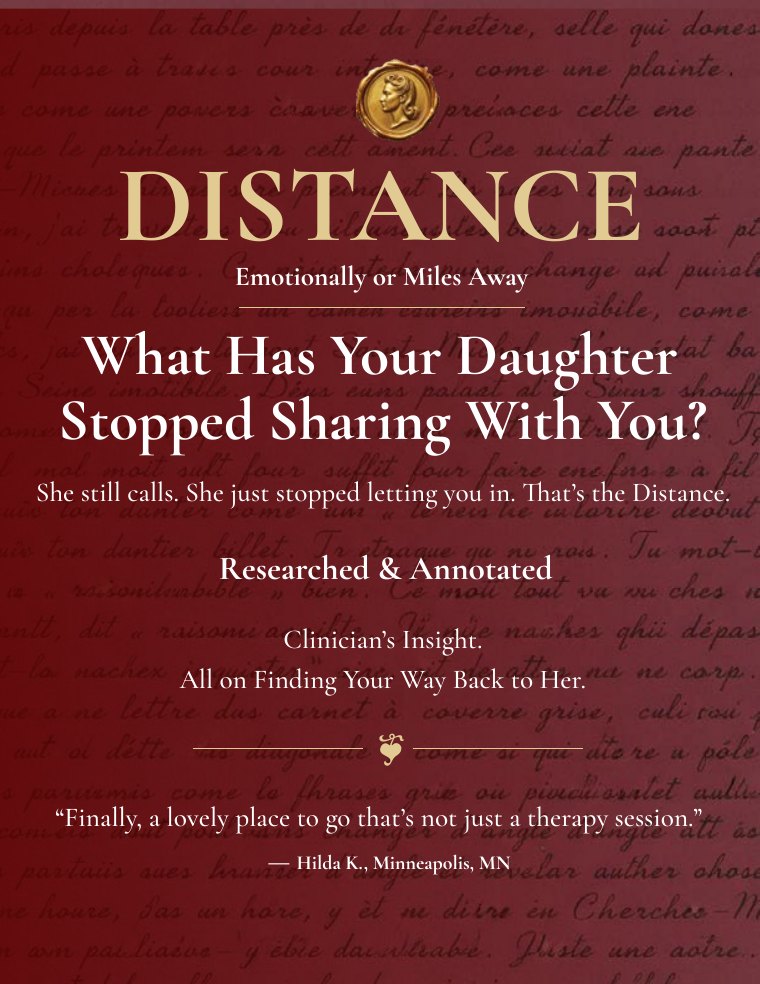
Pre-estrangement is the narrowing stage that comes before a door closes — when the relationship has thinned but not torn. The term was coined by Citizenshare Publishing House to name what the estrangement literature has long overlooked: the mothers whose daughters still answer. It is an editorial term of the House — a name for a season, not a clinical diagnosis.
Nothing has been declared. No one has said the word. And that is precisely the point — pre-estrangement is defined by what has not yet happened.
The one-question test
Does your daughter still answer you? Even briefly. Even politely. Even three words where there used to be three paragraphs. If she does, you are not estranged. You are in pre-estrangement — the quiet distance, and the stage where repair is most possible.
The signs
The replies are shorter. The gaps between them are longer. Calls become texts; texts become reactions. The visits still happen and somehow don’t. Holidays are attended and hollow. Each individual signal can be explained away — she’s busy, it’s a phase — but the direction of the pattern cannot.
Pre-estrangement vs. estrangement
Estrangement is a closed door: contact has been cut, and the counsel for that stage is about grief, patience, and the carefully worded outreach. Pre-estrangement is an open channel narrowing: contact continues, but thinner — and the counsel for this stage is entirely different, because every message she still answers carries information about what contact currently costs her, and what warmer terms would require. The two stages call for opposite strategies; treating one as the other is the most common — and most costly — mistake a mother can make. The distinction is explored at length in our essay, Estranged or Distant? The Difference Decides What You Do Next.
Why the stage matters
Pre-estrangement is the only stage in which the relationship can be read while it is still moving. The channel is open; the negotiation, though unspoken, is still live. It is also the stage most likely to be wasted — because nothing has been declared, nothing seems to demand action. The quiet distance is not a waiting room. It is a working season.
Nine private questions. Reviewed by a clinician.
A personally prepared Distance Reading from the Clinician’s Desk.
Citizenshare offers Bibliotherapy Lineage education — not therapy or clinical bibliotherapy — literary preparation and relational systems, informed and reviewed by a U.S. trained clinician. It does not provide psychotherapy, counseling, diagnosis, or medical treatment. Participation does not create a clinician–patient relationship and does not replace individual care from a mental health professional. If you are in crisis in the United States, call or text 988, or call 911.